

FLORIA
Visible differences begin with a design that reads the face.
The more complex the face shape, the more important it is to accurately read width and volume.
Even with the same face size, the ratio of temples, cheekbones, and jaw differs. It starts with reading the structure of the face.
A face that looks wide due to hollowing differs from one that looks wide due to volume. We first distinguish where to fill and where to reduce.
We do not fit the face to a single treatment. By examining width and volume together, we design what suits each face.
Faces that look equally wide can have different underlying causes. Hollowing at the temples and lateral cheeks can make the cheekbones appear more prominent, while excess volume in the cheeks and lower face can make the contour look heavy. Distinguishing the cause determines whether to fill or reduce.
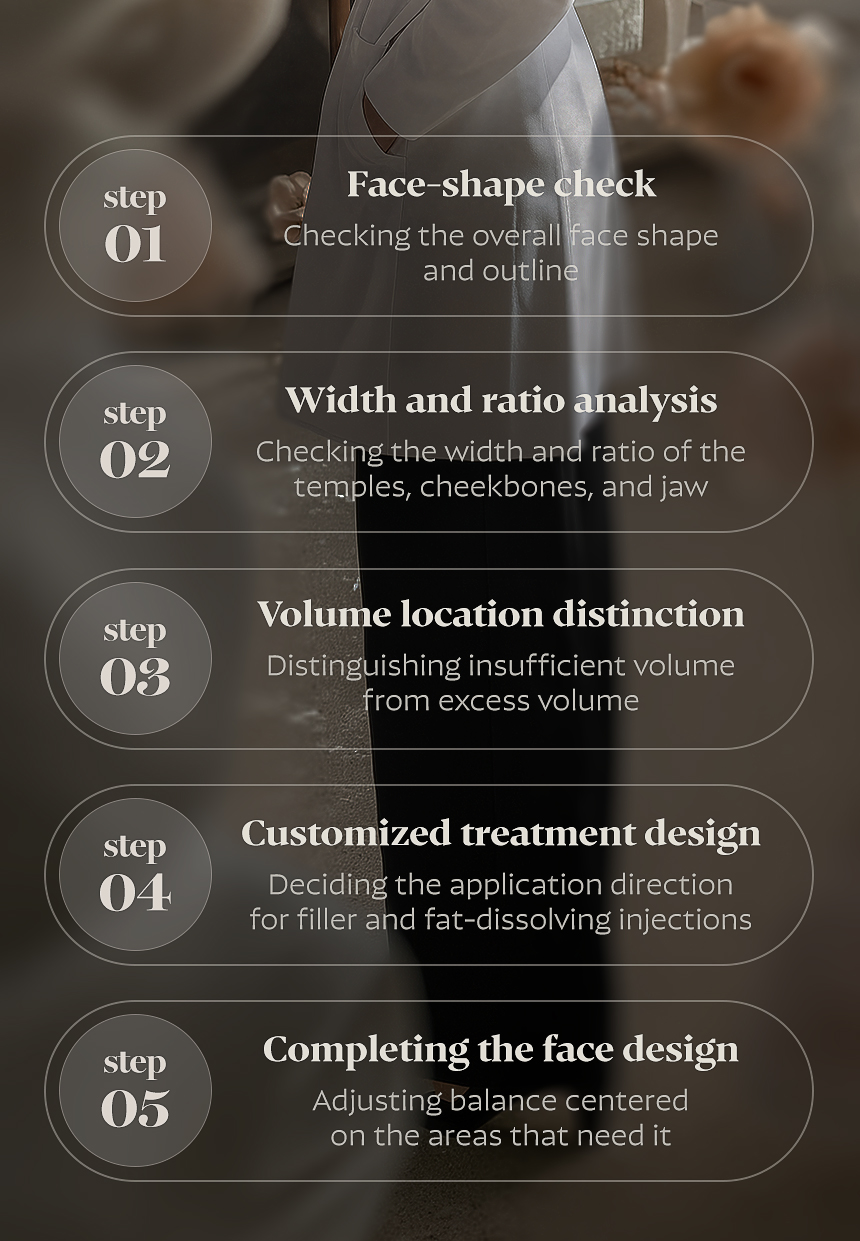
Floria looks at the structure beneath the facial lines. By examining width, ratio, and volume location, we design the direction that suits each face.





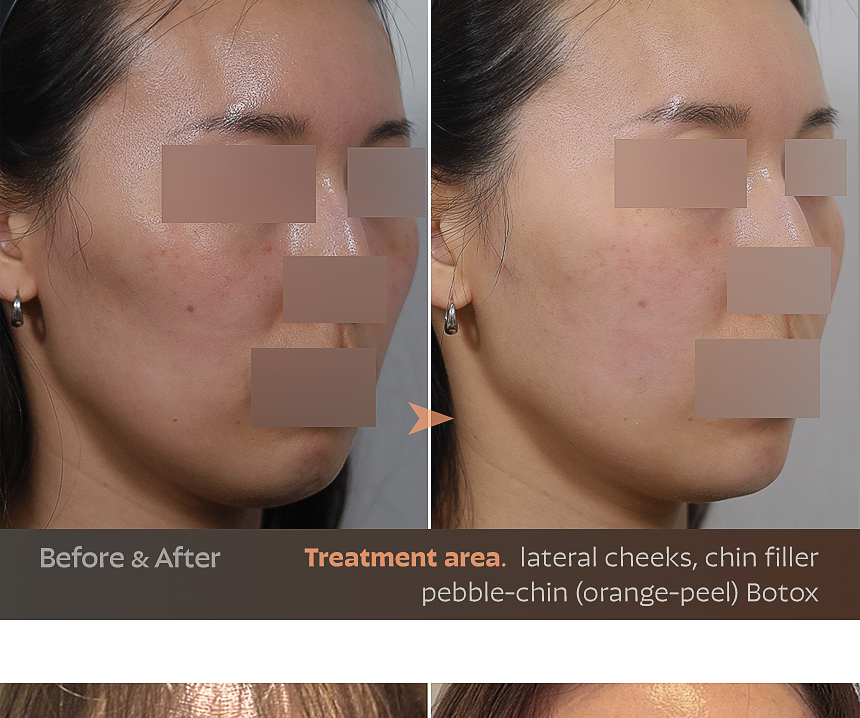
Through Floria's actual treatment cases, see how facial balance changes.
Results may vary depending on individual skin condition and treatment area.
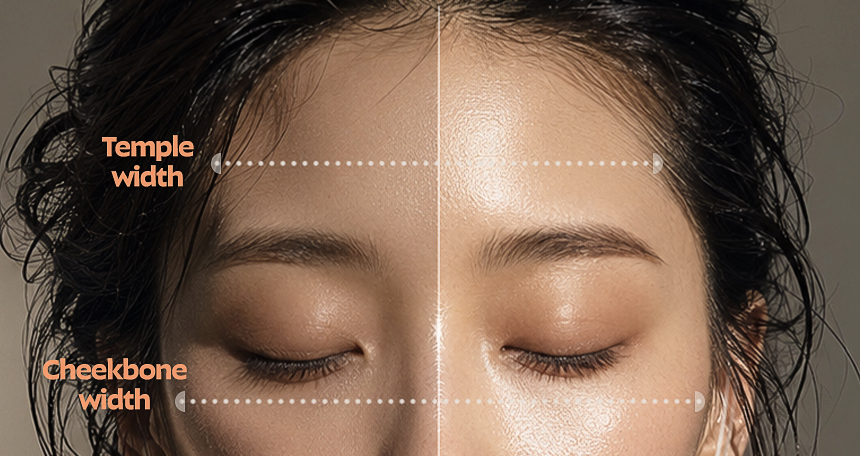
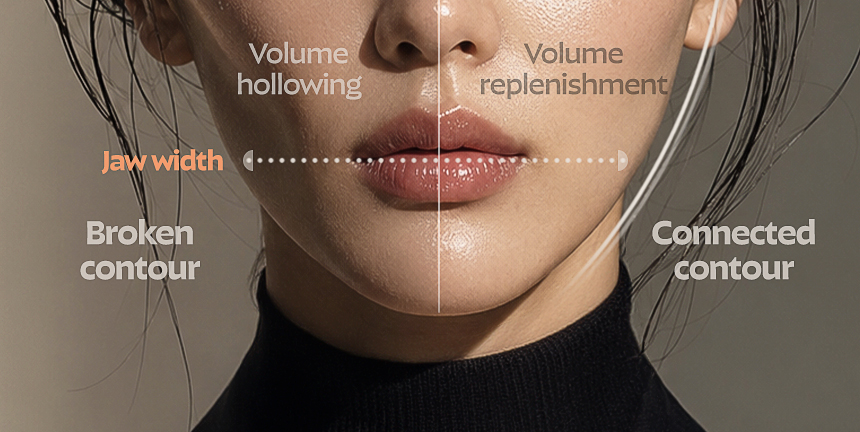
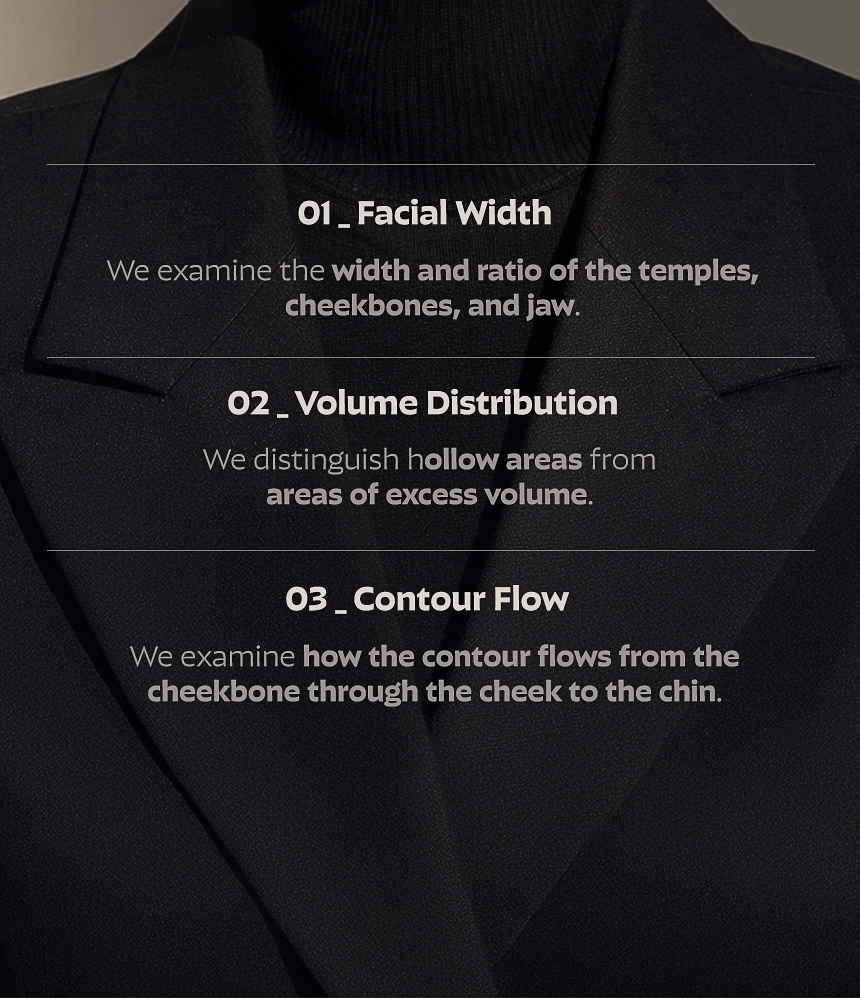



Even with the same face size, the impression changes depending on the ratio of temples, cheekbones, and jaw. Accurately reading the facial structure becomes the standard for design.
The relationship among these three widths reveals the face's basic proportions.
Face shape varies depending on the width and contour of the bone structure. The design standard varies depending on face shape.
The peanut shape and gourd shape are not basic bone structures, but contour changes that result from volume loss. We examine bone structure and volume change together.
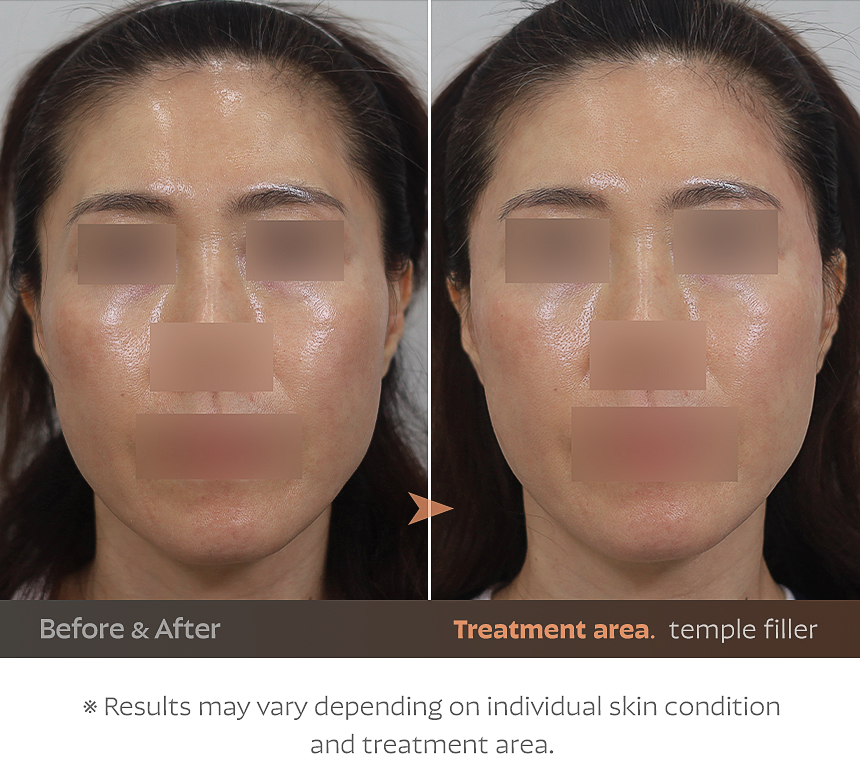

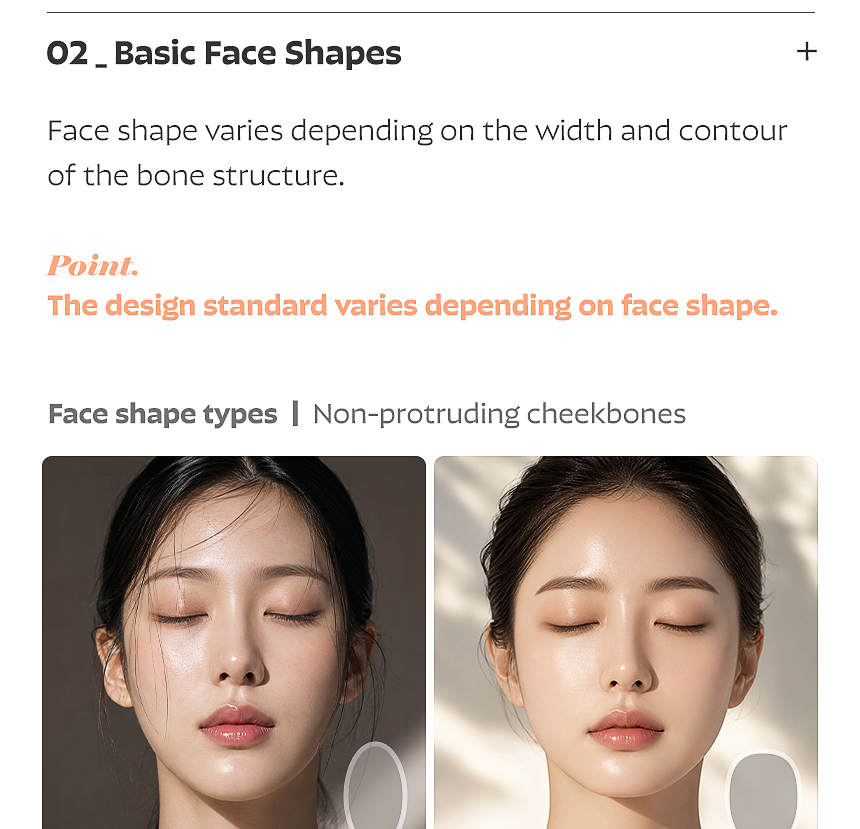

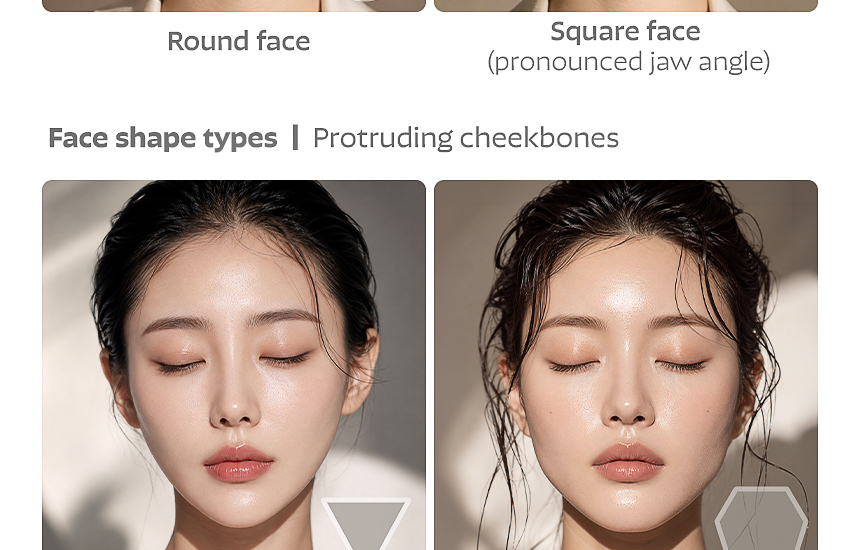
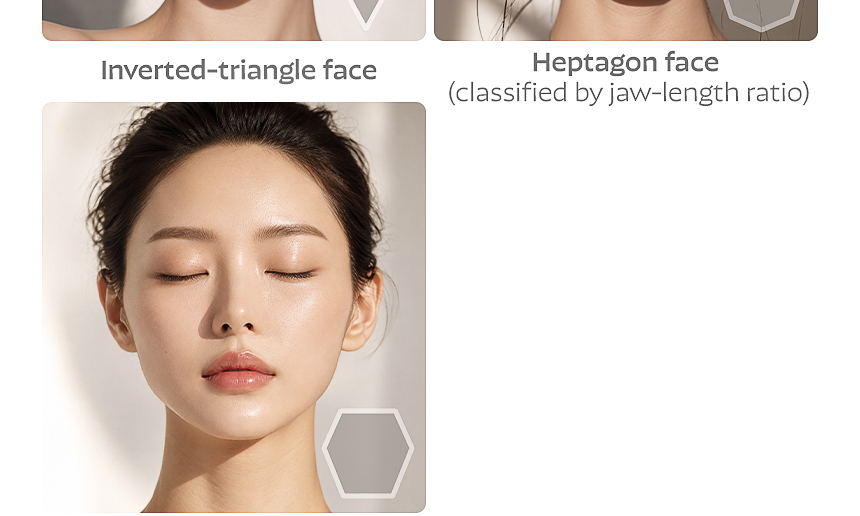


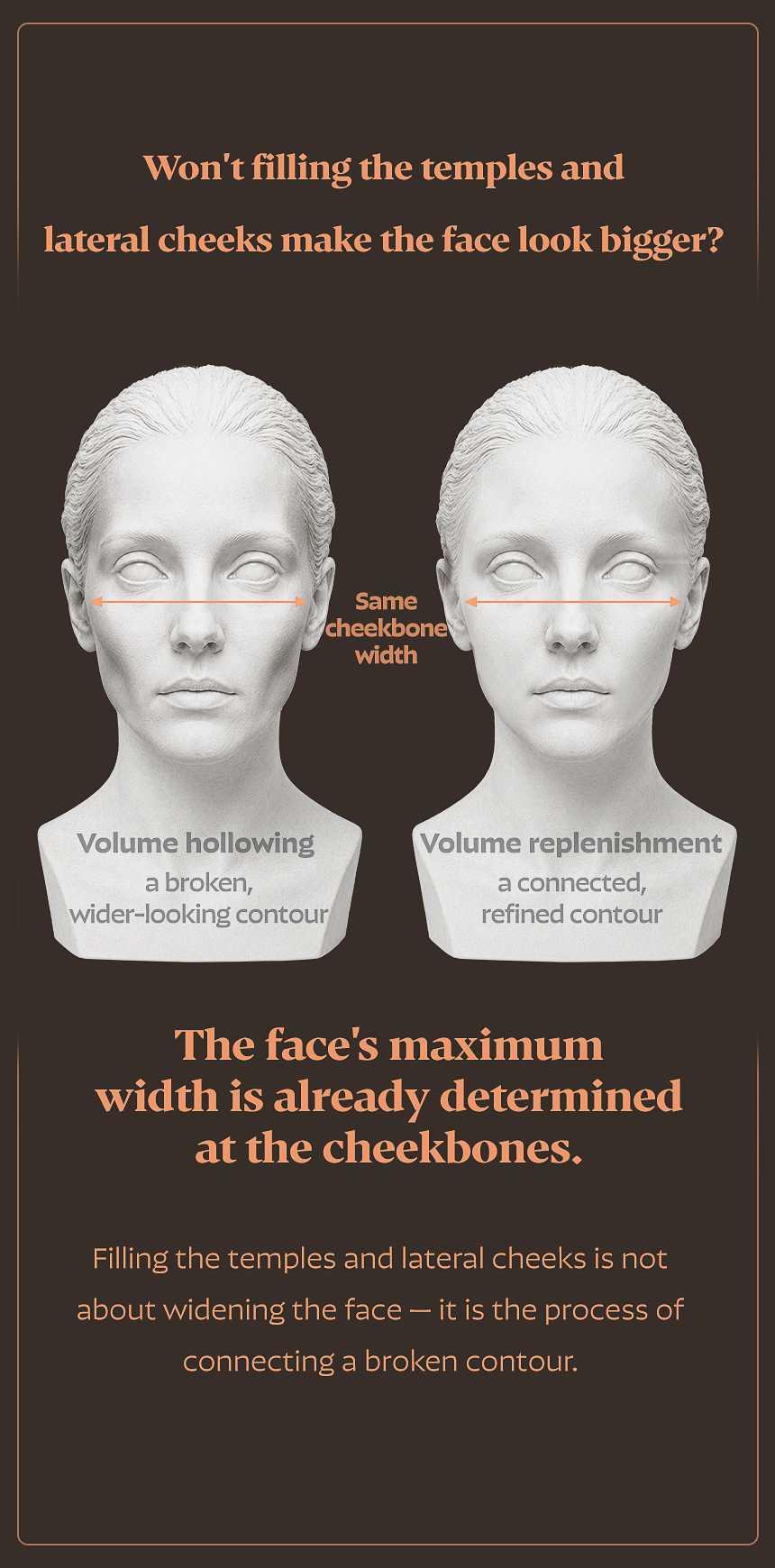
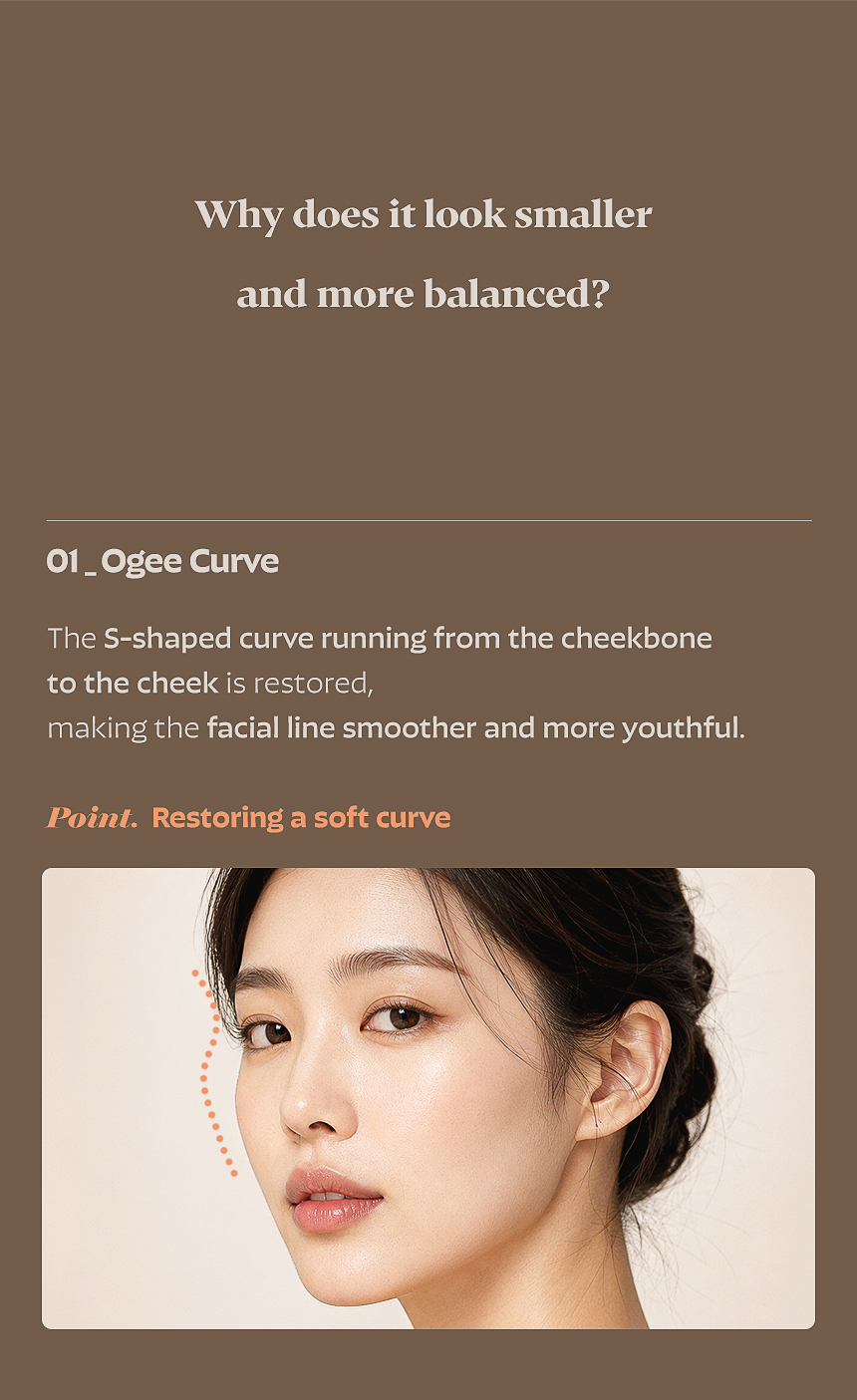
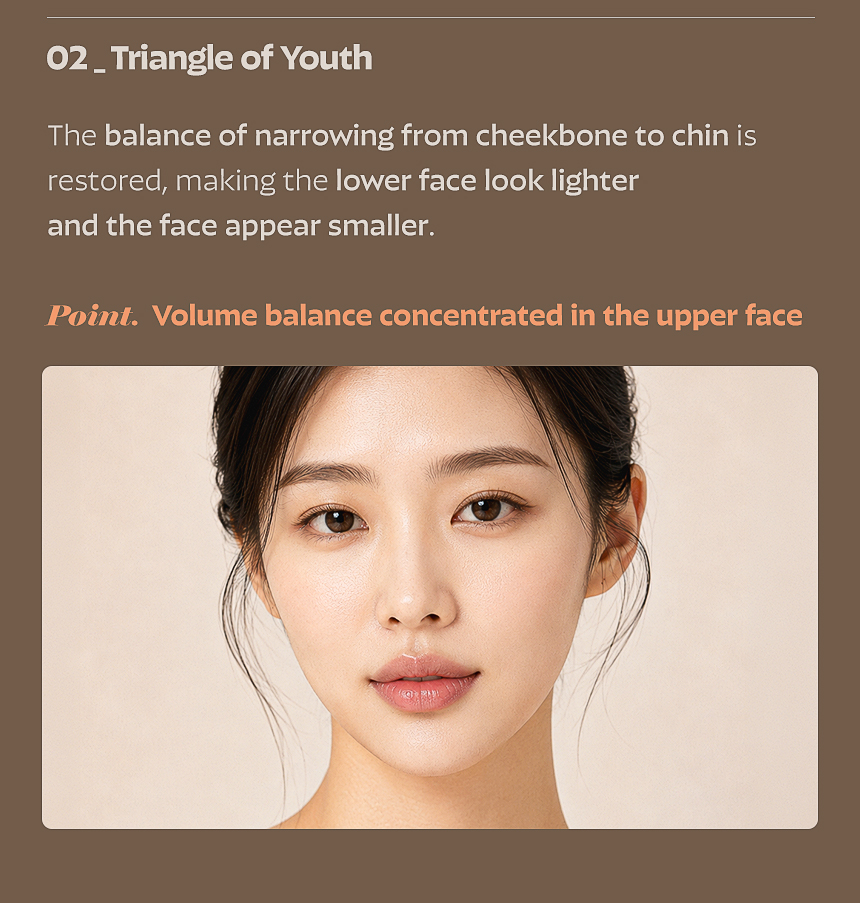
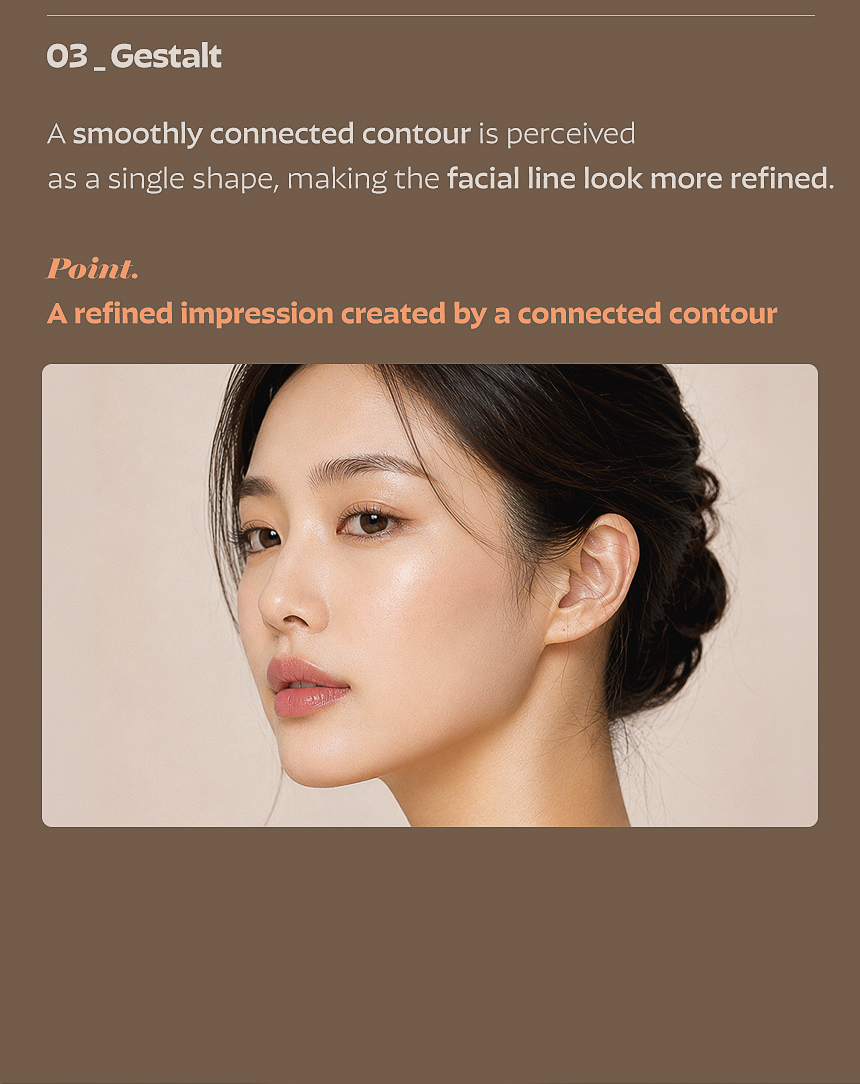
When the temples and lateral cheeks hollow, the cheekbones appear more prominent and the contour looks broken. When the hollow areas connect naturally, the facial line becomes smooth even at the same cheekbone width.
The face's maximum width is already determined at the cheekbones. Filling the temples and lateral cheeks is not about widening the face; it is the process of connecting a broken contour.
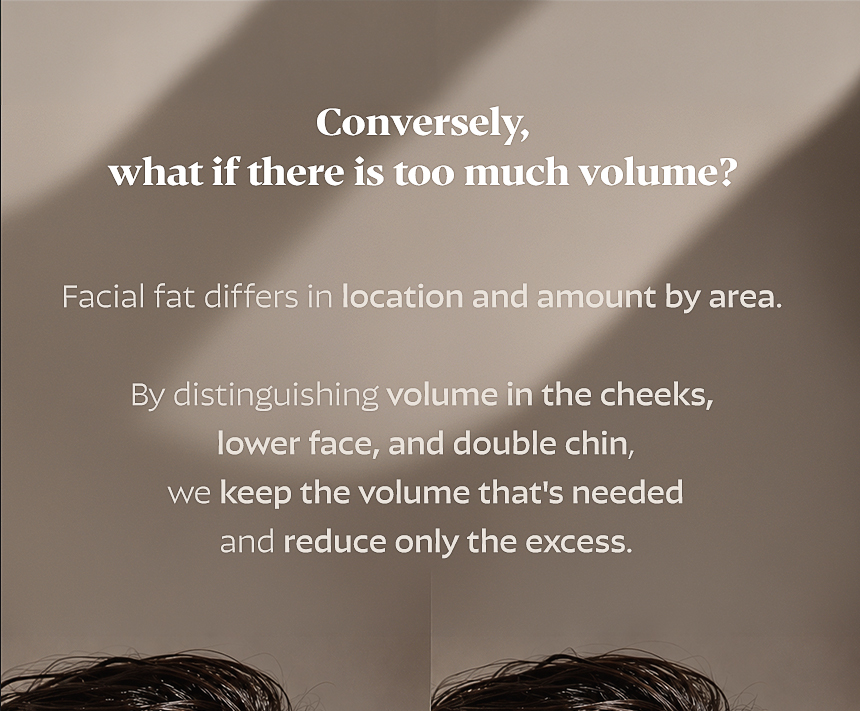
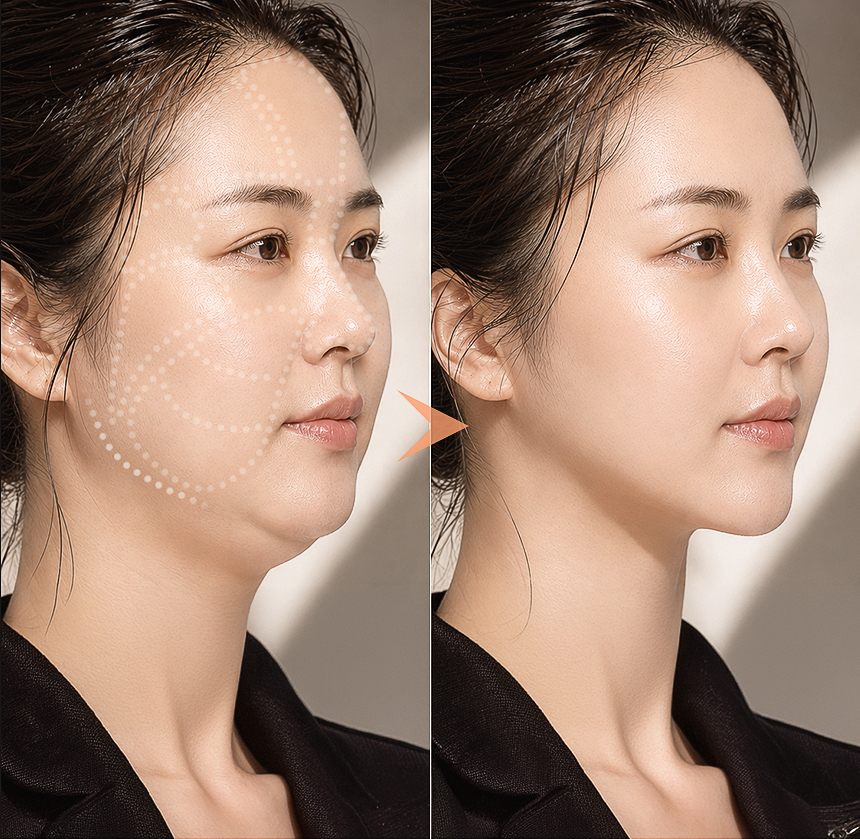
Facial fat differs in location and amount by area. By distinguishing volume in the cheeks, lower face, and double chin, we keep the volume that's needed and reduce only the excess.
We do not fit the face to the treatment. We examine structure and volume to select the treatment that's needed.
We naturally connect volume in hollow areas such as the temples, lateral cheeks, and forehead. The needed amount is delicately adjusted to the face shape and area, creating a balance that is never excessive.
We replenish only the lacking volume, only as much as needed.
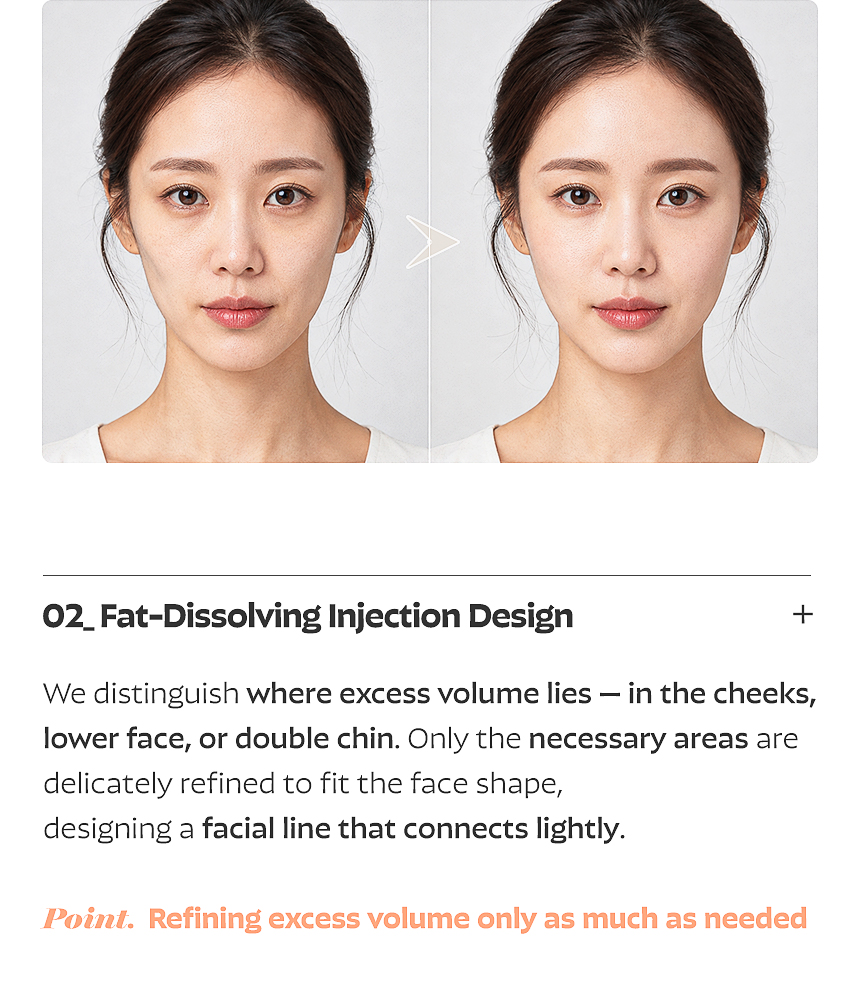
We distinguish where excess volume lies in the cheeks, lower face, or double chin. Only the necessary areas are delicately refined to fit the face shape, designing a facial line that connects lightly.
We refine excess volume only as much as needed.
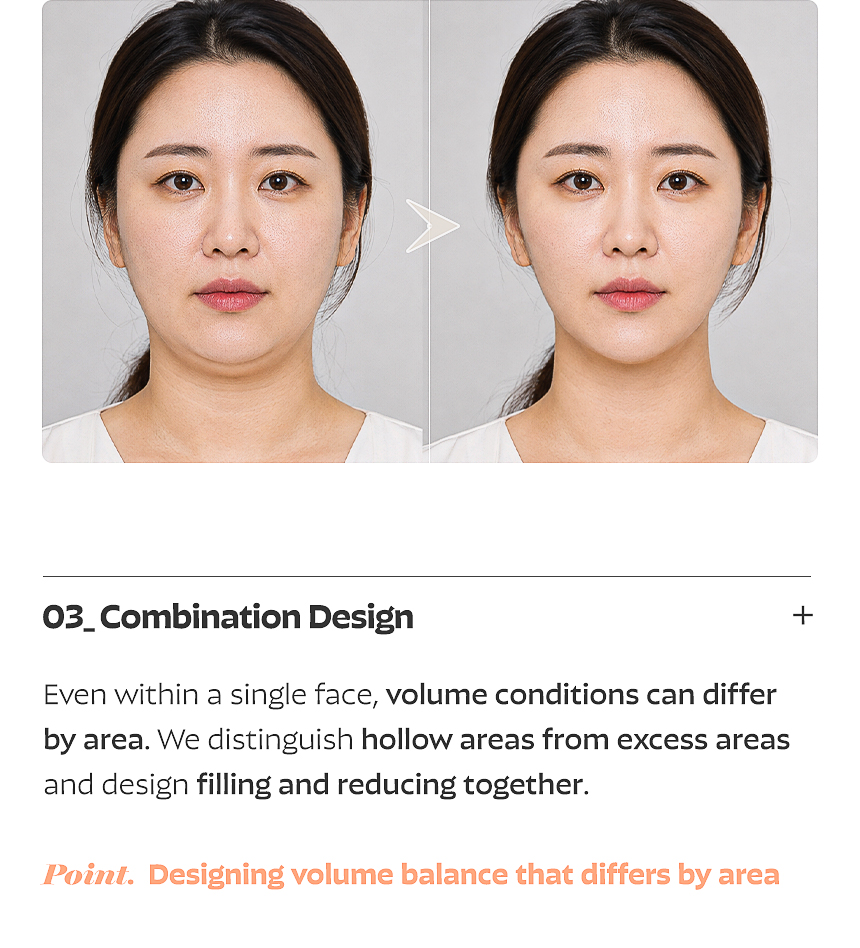
Even within a single face, volume conditions can differ by area. We distinguish hollow areas from excess areas and design filling and reducing together.
We design volume balance according to each area.



The Floria Face Design Program reads structure, ratio, and volume location together to design the direction that suits each face.
The more complex the face shape, the more important the medical team's judgment in reading the balance of width and volume.
Face design begins with Floria's precise analysis.




Treatment Pricing